Long mental recovery for soldiers burned in CFB Wainwright fire: doctor
-
Share on Facebook
-
Share on Bluesky
-
Share on X
- Copy Link
EDMONTON — Soldiers being treated in hospital for burns from a deadly fire at an Alberta military base have a long psychological recovery ahead of them, says an Edmonton surgeon treating some of the injured.
Dr. Josh Wong, the interim medical director of the Edmonton Firefighters Burn Treatment Unit at the University of Alberta Hospital, says recovering from such severe burns can take months or years.
“For patients who experience severe burns, recovery is often a long and challenging journey. Their care doesn’t end when they leave the ICU or even the hospital,” Wong said Thursday at a news conference at the hospital.
“Many will require ongoing treatment and rehabilitation.”
Wong, who is a plastic and reconstructive surgeon specializing in burn cases, said the mental impact from even small burns can become more intense over time.
“I have mentioned to the families that the psychological effect actually comes up stronger as they recover and become more aware later on as well,” he said.
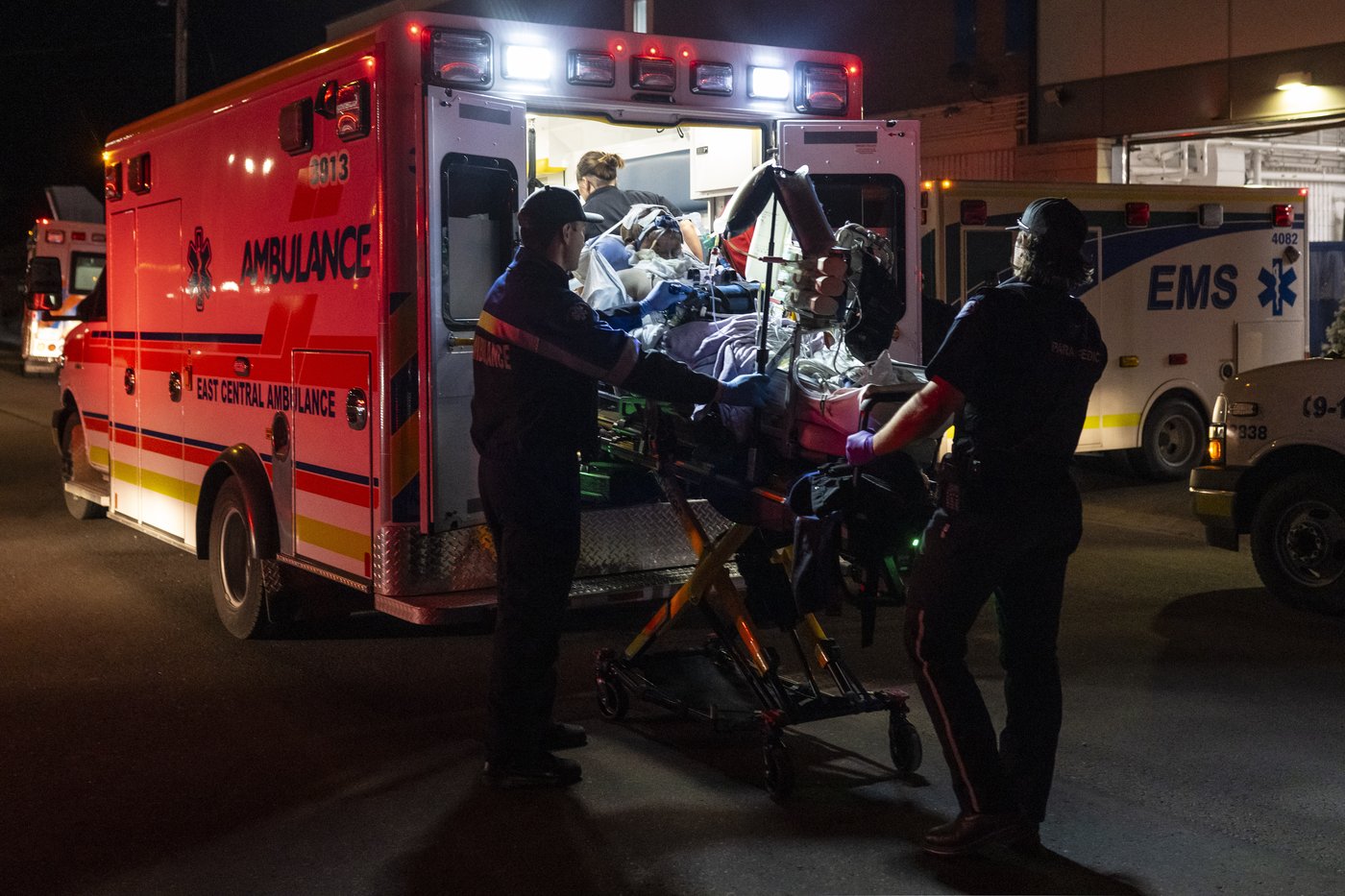
The Armed Forces had said that a windstorm on Oct. 17 pushed flames from a grass fire onto troops in a training exercise at Canadian Forces Base Wainwright, southeast of Edmonton.
Prime Minister Mark Carney called the fire one of the worst tragedies for the Armed Forces on home soil during peacetime.
Four were killed in the fire. They have been identified as: Pte. Shaun Farrell, 23, of Prince Albert, Sask.; Pte. Aidan Goulding, 23, of North Vancouver, B.C.; Pte. Hayden Lykkemark, 19, of Langley, B.C.; and Sgt. Morgan Wong, 26, of Edmonton.
A fifth soldier, Pte. William Douglas Dal Bianco, died of his injured earlier this month while in an Ontario hospital.
About three dozen soldiers were initially injured.
Acute Care Alberta said 19 were still being cared for in provincial hospitals, with seven listed in critical condition.
The military said Saturday that two others remained in hospitals in British Columbia and Ontario, where they were transferred to be closer to their families.
Michael Suddes, interim chief operating officer for the Alberta Health Services’ Edmonton area, said officials could not provide specifics about the recovering soldiers due to patient confidentiality.
“But there is a spectrum,” he said. “Several patients, while they may be in critical condition, several (other) patients have already been discharged home.”
Dr. Sayeh Zielke, interim chief executive officer of Acute Care Alberta, said the fire put a huge stress on the province’s health-care system.
“We passed it,” she said. “We were able to manage the capacity and co-ordinate the response to provide the care, not only for the injured soldiers, but also the rest of our version that needed care.”
Zielke said health-care providers are still in the thick of treating the injured soldiers, but soon there will be a debriefing process to see if improvements can be made.
“We’re trying to do our best by every single day. So for us, it very much feels like a marathon,” she said.
“There’s always lessons to be learned, and we can always do better and aim for perfection.”
Wong said patients with severe burns require complex, intensive treatment that involves multiple procedures and surgeries, extensive rehabilitation, psychological support and ongoing followup care.
He said the Wainwright fire presented an extraordinary challenge for his team, who admitted 20 critically injured patients in a short period of time — about five times the specialized burn critical care capacity.
He added that there were already 15 other burn patients in care at the time.
“Our teams moved quickly to mobilize the physicians, the nurses, other health-care professionals with specialized training and experience needed to provide this level of care,” Wong said.
He also recognized that many health-care workers may start to feel the effects of their hard work and trauma they have witnessed, and his team is preparing for that.
“When you’re in the midst of all the work and the adrenalin rushing and trying to help these patients, that’s where our focus is going to,” he said.
“But we know very well that as the weeks and the months go on, there will be some effects, there will be some fatigue, there’ll be some psychological effects of these injuries.”
This report by The Canadian Press was first published Nov. 26, 2026.
Daniela Germano, The Canadian Press